
AI ad research · Guide
Analyzing Brands and Creatives in ChatGPT's Super Bowl Ads: A Two-Layer Toolkit
The Short Answer
If you want to analyze the brands and creatives in ChatGPT's Super Bowl ads, you first have to notice that the phrase describes two different things. The first is OpenAI's own Super Bowl commercials — The Intelligence Age in 2025 and You Can Just Build Things in 2026 — which you can study with TV ad research tools such as iSpot.tv's Super Bowl Ad Center, USA TODAY Ad Meter, and the ad archives kept by the advertising trade press. The second is the sponsored cards that brands pay to place inside ChatGPT conversations, which require a different kind of tool: a searchable ChatGPT ad library such as ChatAdsWatch.
Most coverage online blurs these two layers together, which makes tool comparisons confusing. This article separates them, lists what each layer's tools can actually measure, and walks through a workflow you can reuse — whether your goal is competitive creative research, planning your own entry into AI advertising, or simply understanding what OpenAI bought for its reported $14 million debut.
Two Kinds of "Super Bowl Ads" Travel Through ChatGPT
The confusion is understandable, because both layers made headlines in the same news cycle.
Layer one is the broadcast layer. OpenAI aired its first-ever Super Bowl commercial, The Intelligence Age, during Super Bowl LIX in February 2025 — a 60-second black-and-white pointillism animation that reportedly cost about $14 million with an expected audience of roughly 130 million viewers. In February 2026, OpenAI returned during Super Bowl LX with its second national spot, You Can Just Build Things, a 60-second ad centered on its Codex coding agent, supported by regional ads profiling small businesses.
Layer two is the in-chat layer. OpenAI now sells advertising inside ChatGPT itself — sponsored cards visually separated from answers, served to eligible adult Free and Go-tier users in supported markets. This is no longer hypothetical: at Super Bowl LX, Anthropic ran an entire TV campaign mocking the idea, with the tagline "Ads are coming to AI. But not to Claude." Sam Altman publicly responded, and the exchange turned in-chat advertising into a mainstream talking point. Brands buying sponsored cards in ChatGPT are an observable market. Game-day snack questions, party planning, and "best Super Bowl ads" queries are research ideas to test against available samples, not verified placements presented in this article.
Timing matters: OpenAI began testing ads in ChatGPT on February 9, 2026, after Super Bowl LX on February 8. The in-chat workflow below is not evidence that sponsored cards ran during that game.
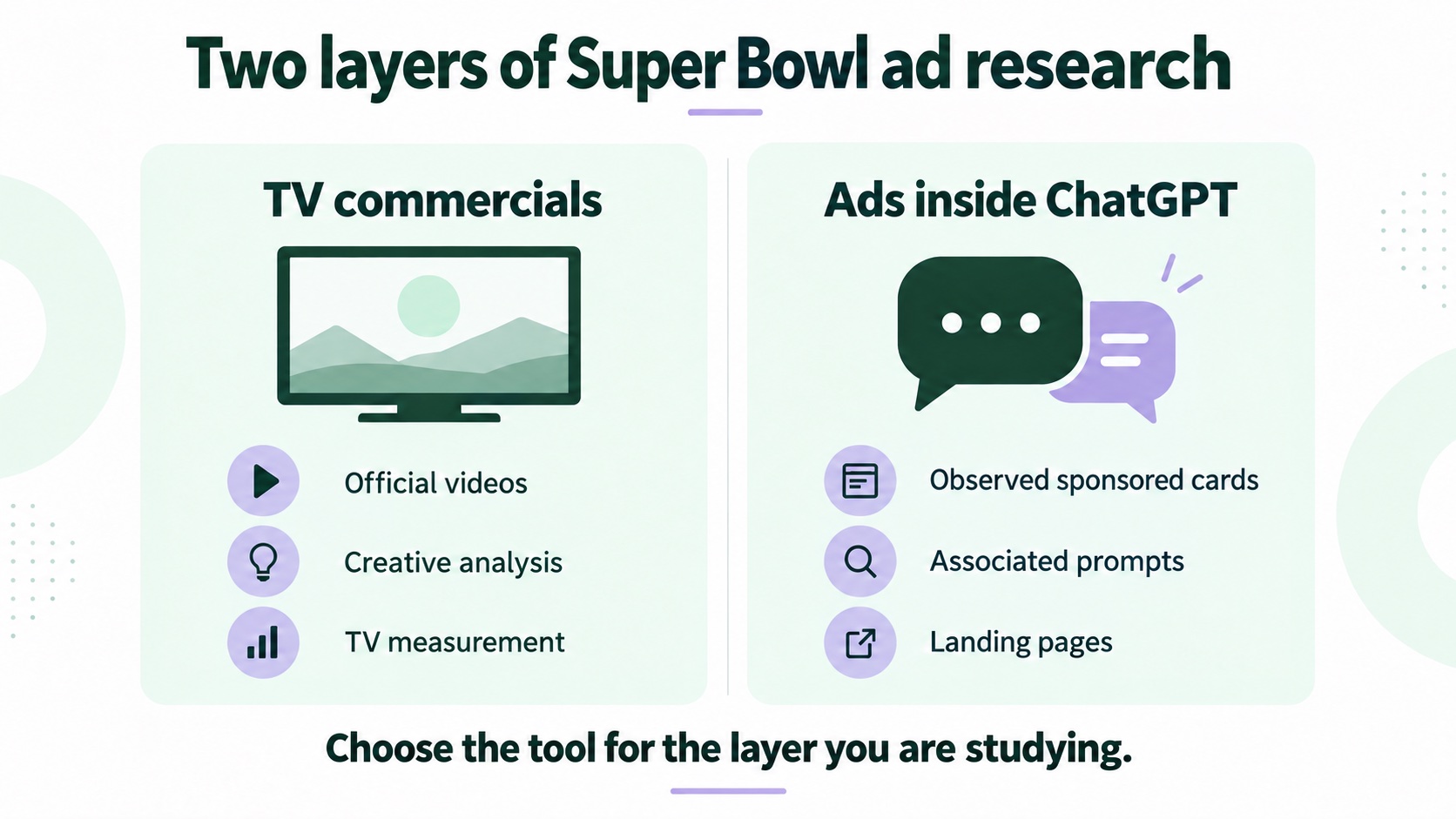
Figure 1 — The broadcast layer and the in-chat layer require different analysis tools.
The tools that measure a television commercial have no visibility into what appears inside a chat session, and vice versa. Any analysis that claims to cover "ChatGPT's Super Bowl ads" without saying which layer it means is not really an analysis at all.
What Is Publicly Verified About OpenAI's Super Bowl Commercials
Before comparing tools, here is what can be verified from public reporting, with sources you can follow yourself:
- 2025 (Super Bowl LIX): OpenAI's first Super Bowl ad, The Intelligence Age, was a 60-second spot using black-and-white pointillism-style animation to trace human innovation from early tools to ChatGPT. The Verge reported roughly $14 million for the placement, and CMO Kate Rouch described an expected audience of about 130 million. The final animation was made by human artists; Sora was used during early conception and prototyping.
- 2026 (Super Bowl LX): OpenAI's second ad, You Can Just Build Things, aired during Super Bowl LX. It follows a person's lifelong curiosity to build — from a child's hand tracing a cobweb through early computing history to scenes of building robots and coding alongside ChatGPT — and positions Codex as the latest step in that lineage. ADWEEK reported the year's buy as "roughly consistent" with the $14 million debut spend. The campaign also featured small businesses; OpenAI's official stories profile a seed farm, a metal salvage business, and a family-run tamale shop.
- The competitive context: Super Bowl LX's ad breaks became a showcase for AI advertising. Anthropic's campaign challenged in-chat ads directly, alongside its statement that Claude would remain ad-free. Use the ad archives to verify other advertisers and creatives individually.
Two cautions on these numbers. First, the $14 million figure is a reported placement estimate — it is not an audited media spend. Second, actual Super Bowl pricing varies by year, placement, market, and package, so resist converting the headline number into a "cost per viewer" without labeling it as a back-of-envelope estimate.
Tools That Analyze the TV Commercials
For the broadcast layer, the established TV measurement ecosystem is the right place to look. These tools are built for exactly this job, and most have a free public surface you can use without a contract.
| Tool | What it measures | Access model | Best for |
|---|---|---|---|
| iSpot.tv Super Bowl Ad Center | Ad videos and creative metrics such as likeability and brand recognition; detailed measurement depends on report access | Free public ad center; paid reports and dashboards | Comparing creative performance and attention across advertisers and years |
| USA TODAY Ad Meter | Panelist ratings and published rankings of Super Bowl commercials | Public results; participation subject to registration and rules | Gauging popular sentiment, with all the biases of a self-selected panel |
| EDO | Consumer engagement signals, including search activity following TV ad airings | Public insights and commercial measurement | Judging whether a spot drove measurable action, not just applause |
| Kantar | Brand lift studies: awareness, favorability, purchase intent versus control groups | Commercial | Understanding whether exposure changed attitudes, not just behavior |
| Trade press archives (Ad Age, Adweek, The Drum) | Published ad videos and editorial critique | Public articles; some archives or analysis require paid access | Rewatching published spots and reading professional analysis of creative strategy |
A note on what these tools share: they primarily study broadcast and video advertising. iSpot's likeability scores, Ad Meter rankings, and EDO's search-spike data describe how a spot performed on broadcast and connected TV. None of them can tell you what a brand's sponsored card looks like inside a ChatGPT conversation, which prompts were associated with it, or where the card links. That is the boundary between the two tool families — and it is also why the in-chat layer needs its own toolkit.
Tools That Analyze the Sponsored Cards Inside ChatGPT
The in-chat layer is newer, so the toolkit is thinner and less standardized. The core question is: which brands have appeared in ChatGPT, with which creatives, next to which user questions? A searchable ChatGPT ad library answers this by collecting observed sponsored cards and organizing them for retrieval.
ChatAdsWatch is an independent, third-party example built for exactly this purpose — the workflow below describes its observation features and their limits. Its public ad library currently exposes a snapshot of tens of thousands of observed ads from more than ten thousand advertisers across supported industry categories. Public pages provide summaries and limited creative previews; detailed records and associated buyer prompts are available in the research workspace, subject to account access. Four views organize the research:
| View | The question it answers | Super Bowl example |
|---|---|---|
| Ads | What did the creative actually look like? | Filter by date range around early February and inspect captured card creatives |
| Advertisers | Which brands were present, and in which industries? | Build a watchlist of snack, TV, and streaming brands observed around game-day queries |
| Buyer Prompts | Which question was associated with the card? | Search prompts containing "Super Bowl" to see which conversational contexts attracted ads |
| Landing Pages | Where did each card send users? | Compare how brands handled the click — product pages, offers, or content |
To research the Super Bowl specifically, the workflow looks like this. These queries are examples, not confirmed results: an empty result means the current sample may not cover that topic or period.
- Search by prompt keyword. Use the Buyer Prompts workspace to query Super Bowl–related terms — "Super Bowl party," "halftime show," "best TVs" — to pull the sponsored cards captured alongside those conversations. The prompt context matters as much as the creative: a card captured alongside a party-snacks question is a different strategic signal than one next to a purchase-intent question about televisions.
- Open the advertiser profiles. Each observed card links to an advertiser record aggregating that brand's other creatives, industries, and prompts. This is where you move from "who advertised" to "what is this brand's in-chat strategy."
- Read the creative details. Card-level records include the creative itself, associated prompt counts, available source dates, and supplied appearance counts — the raw material for a competitive creative teardown.
- Follow the landing pages. The landing-page view connects each destination URL back to the ads pointing at it, so you can see how a brand's in-chat message aligns with its on-site pitch.
- Cross-check with website context. Pair the ad observations with Website Analysis for the same domain — estimated traffic channels, AI referral platforms, and search visibility — to see whether observed ad activity sits alongside changes in AI-driven traffic. As the methodology page is careful to state, AI referral visits cannot be directly attributed to a specific paid ad.
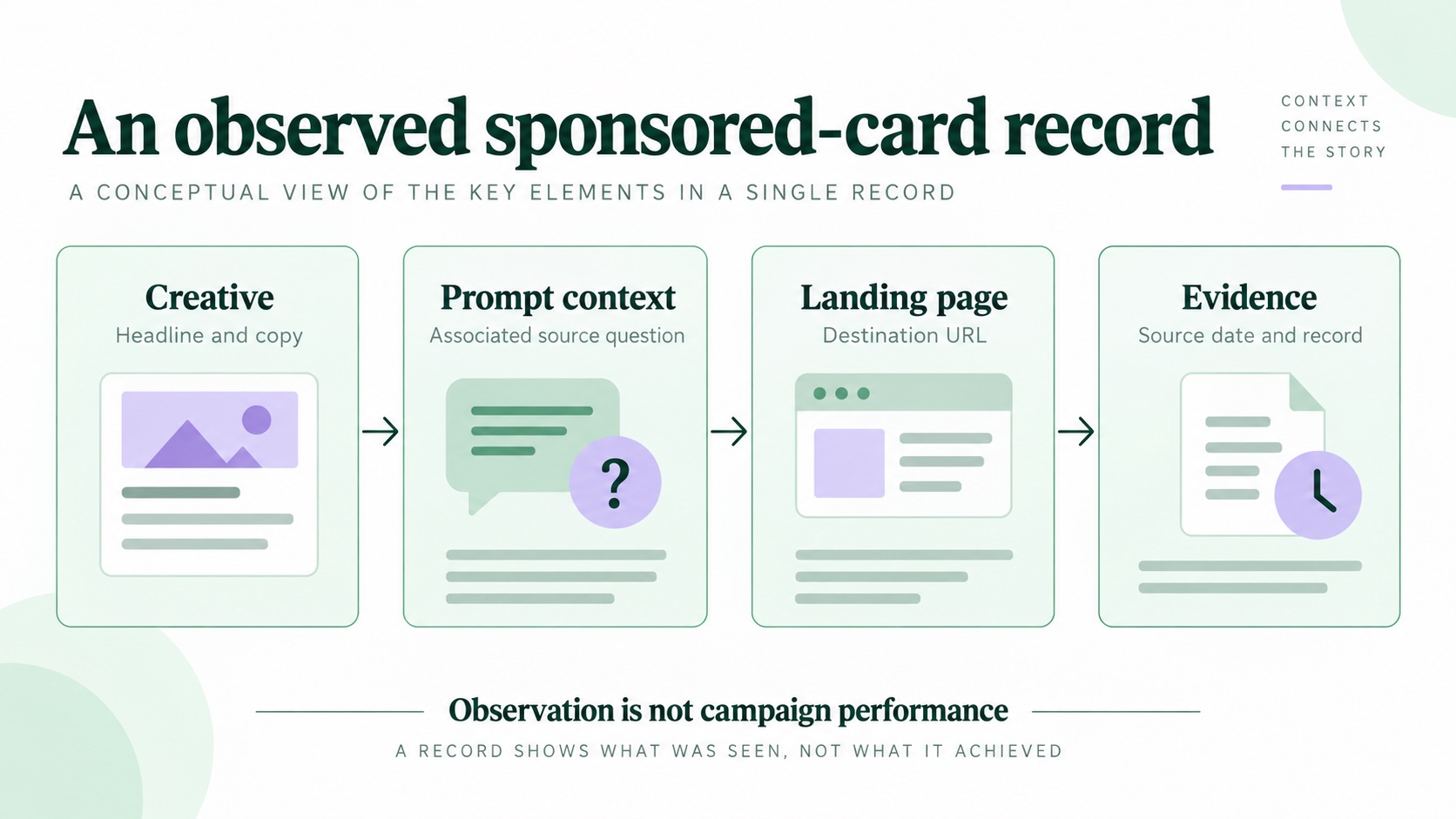
Figure 2 — A single sponsored card decomposes into creative, prompt context, landing page, and evidence fields.
A Game-Day-to-Month-After Workflow
Whichever layer you analyze, timing shapes what you will find. For future events, sampling before, during, and after the game can provide a broader comparison than one post-game snapshot. ChatAdsWatch queries retrieve an existing dated catalogue; they do not collect fresh ads on demand. Apply the cadence below only when your own collection or the available source covers those periods.
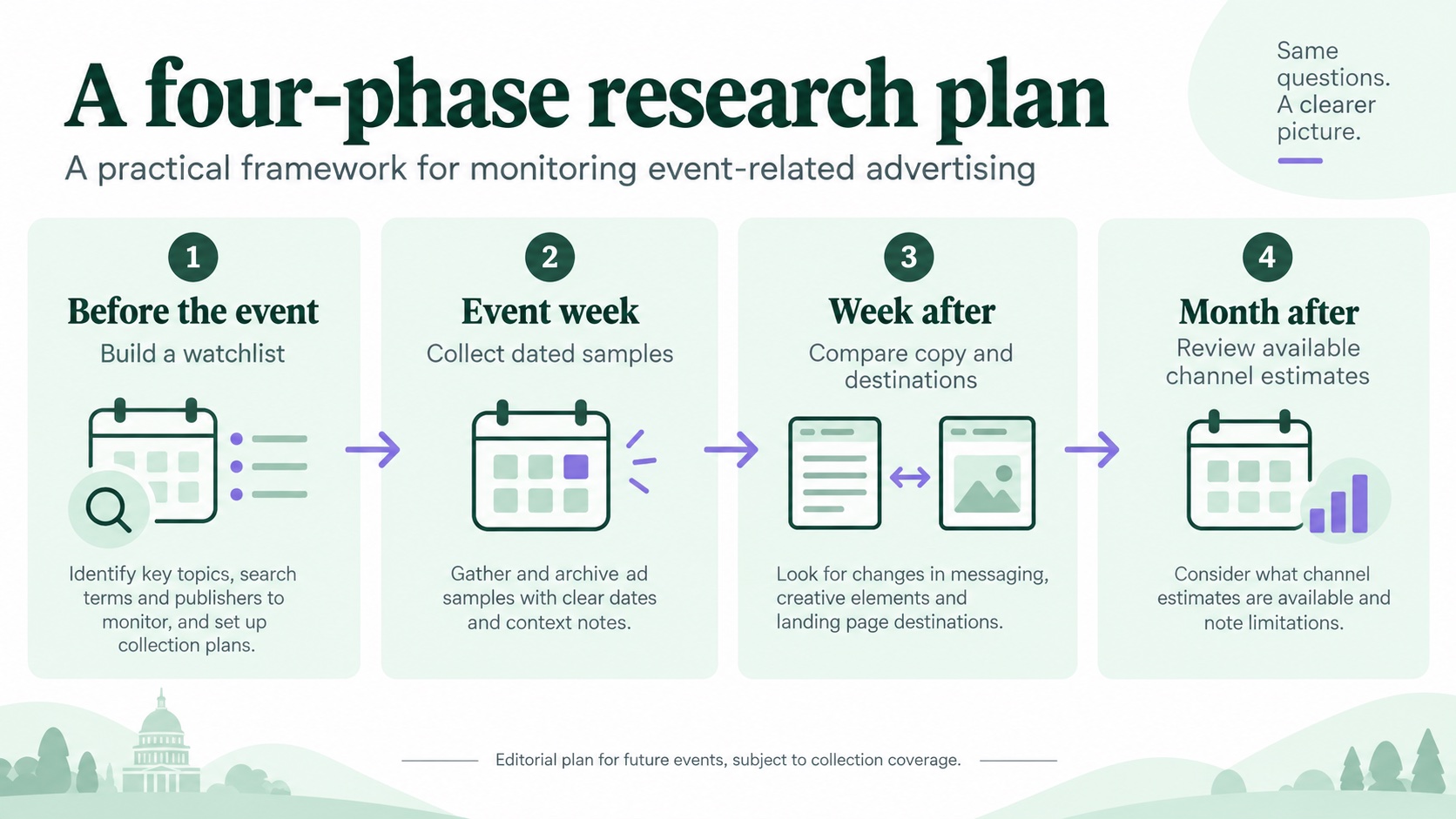
Figure 3 — Sampling the in-chat layer in four phases captures a fuller picture than a single post-game snapshot.
- Two to four weeks before the game: build your observation list — brands, industries, and prompt themes you expect to see. Some Super Bowl advertisers announce or preview their campaigns early in trade press, so your broadcast-layer watchlist doubles as your in-chat hypothesis.
- Game week: capture in-chat samples around high-traffic conversational moments. If a searchable ad library is your tool, check which event-week dates its source actually covers, run relevant prompt-keyword searches, and save records with their source dates.
- The week after: analyze what you captured. Compare creative claims, prompt contexts, and landing pages across the brands in your sample. This is also when editorial analysis of the TV spots (Adweek's reviews, Ad Meter results, iSpot's likeability rankings) is complete, so both layers can be read side by side.
- One month after: cross-check website-level signals. AI referral estimates and traffic channel shifts show up in third-party website data with a lag, so check the reporting period and availability. A month of data alone does not establish that a change was caused by game-week advertising.
The same cadence works for the broadcast layer — just swap capture for rewatching and note-taking from the archives.
If you want to run this cadence on the next big cultural moment, start with the public ad library and use the research workspace for prompt searches: save available records with their dates, and you will have the beginnings of the same kind of competitive file the measurement firms compile for broadcast.
What This Data Can and Cannot Prove
This is the section that keeps an analysis honest, and it applies to both layers.
For the broadcast layer: likeability scores are panel or voting data, not purchase intent. Search spikes following an airing are correlational — other factors (earnings news, product launches, memes) move searches too. The $14 million spend figure is a reported estimate. None of these numbers tell you whether OpenAI's Codex-focused creative converted anyone into a coding agent user.
For the in-chat layer, the boundaries are even sharper:
- Captured appearances are not impressions. An ad library records that a sponsored card was observed in a sample of conversations. It does not record how often the card was actually served, clicked, or paid for. Capture frequency is a sampling signal, not a delivery metric.
- Coverage is a snapshot, not the universe. A library with tens of thousands of observed ads from ten thousand-plus advertisers describes its collection scope — not the total volume of ChatGPT advertising. Absence from the sample is not evidence of absence from the channel.
- Prompt context is context, not a targeting rule. Seeing a card next to a Super Bowl snack question tells you it was captured there; it does not tell you the advertiser targeted that prompt, nor that the association will repeat.
- Third-party website estimates are estimates. AI referral traffic shares come from third-party models and cannot be attributed to any single ad, let alone a Super Bowl moment.
- What an external ad library does not provide: actual spend by in-chat advertisers, click-through and conversion rates, or private audience demographics. OpenAI states that ads do not influence ChatGPT's answers; an observed sponsored card is not a controlled test of that policy.
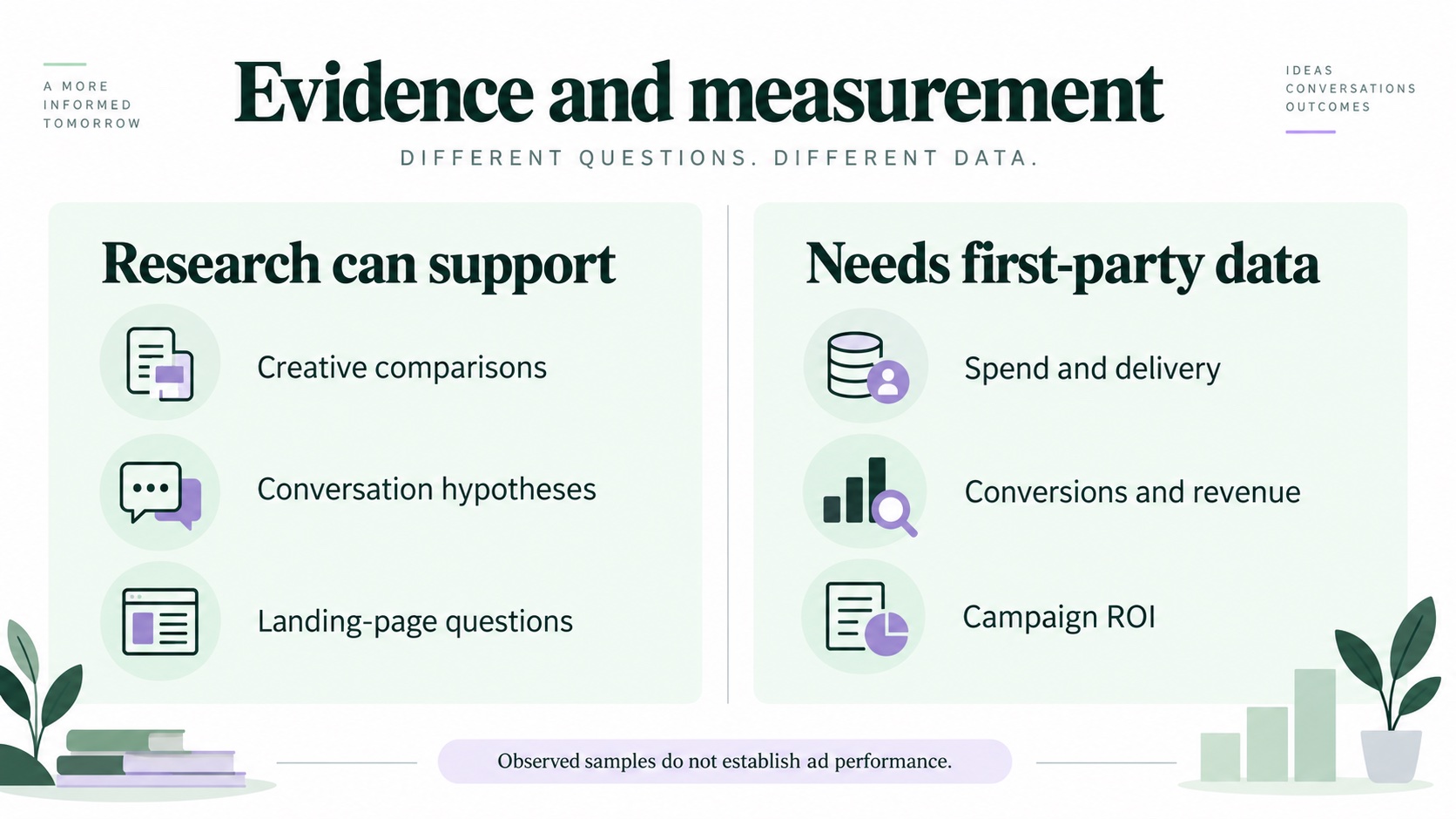
Figure 4 — Observed samples can support strategic hypotheses, but they cannot substitute for measured outcomes.
The practical rule: treat both layers as hypothesis-generating evidence. Use them to decide which creatives to test, which conversational contexts to enter, and which landing pages to build — then validate those hypotheses with controlled tests in your own accounts.
FAQ
1. What was ChatGPT's Super Bowl ad, and is it the same thing as ads inside ChatGPT?
No — they are different layers. OpenAI's Super Bowl commercials are TV spots: The Intelligence Age aired during Super Bowl LIX in 2025, and You Can Just Build Things (featuring Codex) aired during Super Bowl LX in 2026. Ads inside ChatGPT are sponsored cards served after answers in the chat itself. You analyze the TV layer with measurement tools like iSpot.tv and USA TODAY Ad Meter, and the in-chat layer with a ChatGPT ad library — ChatAdsWatch's public library provides previews; its research workspace adds full records and associated prompts with appropriate access.
2. Can I see which brands ran sponsored cards in ChatGPT around Super Bowl topics?
You can see observed samples, not a complete record. A searchable library such as ChatAdsWatch lets you search buyer prompts for Super Bowl–related queries, open the advertiser profiles behind the captured cards, and inspect creatives and landing pages. Remember that the library shows what was observed and collected — a brand's absence from the sample does not prove it never advertised.
3. Where does ChatAdsWatch fit in an AI marketing workflow?
It occupies the observation stage — before you spend, not instead of spending. Teams use the ad library to study which brands and creatives appear in ChatGPT and alongside which prompts, Website Analysis to add available traffic and AI-referral estimates for supported domains, and the methodology page to understand how observed, inferred, and estimated data are labeled. If you are planning your own Super Bowl–style moment in AI advertising, the library is where the competitive homework happens first.
Sources and Editorial Note
Published by ChatAdsWatch Editorial. The broadcast facts are linked to official videos, OpenAI's campaign materials and named reporting. Tool descriptions are based on their public product and Super Bowl research pages. The in-chat examples are research queries and hypotheses, not a verified list of Super Bowl placements. Product features and collection limits were checked on October 13, 2026.
For broader platform evaluation, see our five-layer framework and self-serve platform selection guide.
Put the checklist to work
Start with a real advertiser.
Browse the public library, inspect the methodology, and decide whether the collection fits your market.
Explore the ad library →All articles