
AI ad research · Guide
How to Compare CPM Benchmarks for ChatGPT Ads With Other Platforms
The Short Answer
Comparing CPM benchmarks for ChatGPT ads with other platforms is less a lookup than a normalization exercise. There is no official benchmark to cite: OpenAI's advertiser FAQ states that the platform "does not yet have performance benchmarks across advertisers, industries, or campaign types." The best public evidence on the ChatGPT side is a short, fast-moving pricing history — a reported ~$60 CPM managed pilot that drifted to a self-reported range of roughly $25–65 CPM and $2–10 CPC by mid-2026 — set against third-party benchmark aggregations for the legacy platforms: Google Display around $2.80–$6.50, TikTok around $4.50–$12, YouTube around $5–$14, Meta around $8–$23, and LinkedIn around $15–$44. Taken raw, ChatGPT ads sit near the top of that table. Taken fairly, they cannot be ranked at all until you adjust for geography, campaign objective, seasonality, audience quality, and how often the ad actually matches the conversation it appears in. This article walks through the reported numbers, the five adjustments, and the honest limits of what any of this data can prove.
Why ChatGPT Ads Break the Usual Benchmarking Routine
When media buyers compare CPM across Meta, Google, TikTok, YouTube, and LinkedIn, they are comparing mature auction markets with years of accumulated benchmark reports. Four structural differences make ChatGPT advertising a different kind of comparison:
- One ad surface per answer. A ChatGPT ad is a single sponsored card placed below the assistant's response — with creative text, an image, and a destination link. There is no feed to scroll, no sidebar, no second slot. Inventory is structurally scarce in a way no feed platform's is.
- A deliberately small ad-eligible audience. OpenAI describes ads as appearing to eligible Free and Go users in supported markets, subject to age, location, conversation, and policy restrictions. Paid ad-free tiers are outside this audience. The reachable audience is a fraction of the platforms' headline user counts.
- Thin, uneven inventory. In one large independent snapshot, SE Ranking ran 50,006 US commercial prompts in July 2026 and found a sponsored card on 25.94% of them, from 1,159 unique advertisers (SE Ranking's original study). Most prompts in that sample showed no ad — which means a "CPM" on ChatGPT buys access to a smaller, different pool of moments than the same CPM on Meta.
- A market still discovering its price. The buying rules changed three times in four months, and the auction is relevance-weighted and second-price, so a maximum bid is not a quoted clearing price. There has not been enough stable trading time to produce the kind of smoothed averages benchmark reports rely on.
None of this makes comparison pointless. It means the raw numbers are the start of the analysis, not the end.
What ChatGPT Ads Have Actually Cost: A Reported Pricing Timeline
OpenAI does not publish a public price list, so the reliable picture comes from trade-press reporting and OpenAI's own product documentation, assembled in one table:
| Phase | Date | Reported pricing | Source type |
|---|---|---|---|
| Managed pilot | Feb 9, 2026 | ~$60 CPM; $200,000–$250,000 minimum commitment | Trade press (Adweek and Digiday reporting, relayed by AI Business Weekly) |
| Pilot expansion | April 2026 | CPMs reported as low as $25; minimum cut to $50,000 | Trade reporting summarized by Thrad |
| Self-serve launch | May 5, 2026 | No minimum commitment; $25/day campaign floor in the US; suggested CPC bids of $3–5; CPC bidding and measurement tools introduced | OpenAI's launch announcement and Ads Manager documentation, summarized by Thrad and Rankings.io |
| Mid-2026 trading | Jun–Sep 2026 | Self-reported examples around $25–65 CPM and $2–10 CPC; some reports exceed these bands | Individual advertiser and agency posts, not audited |
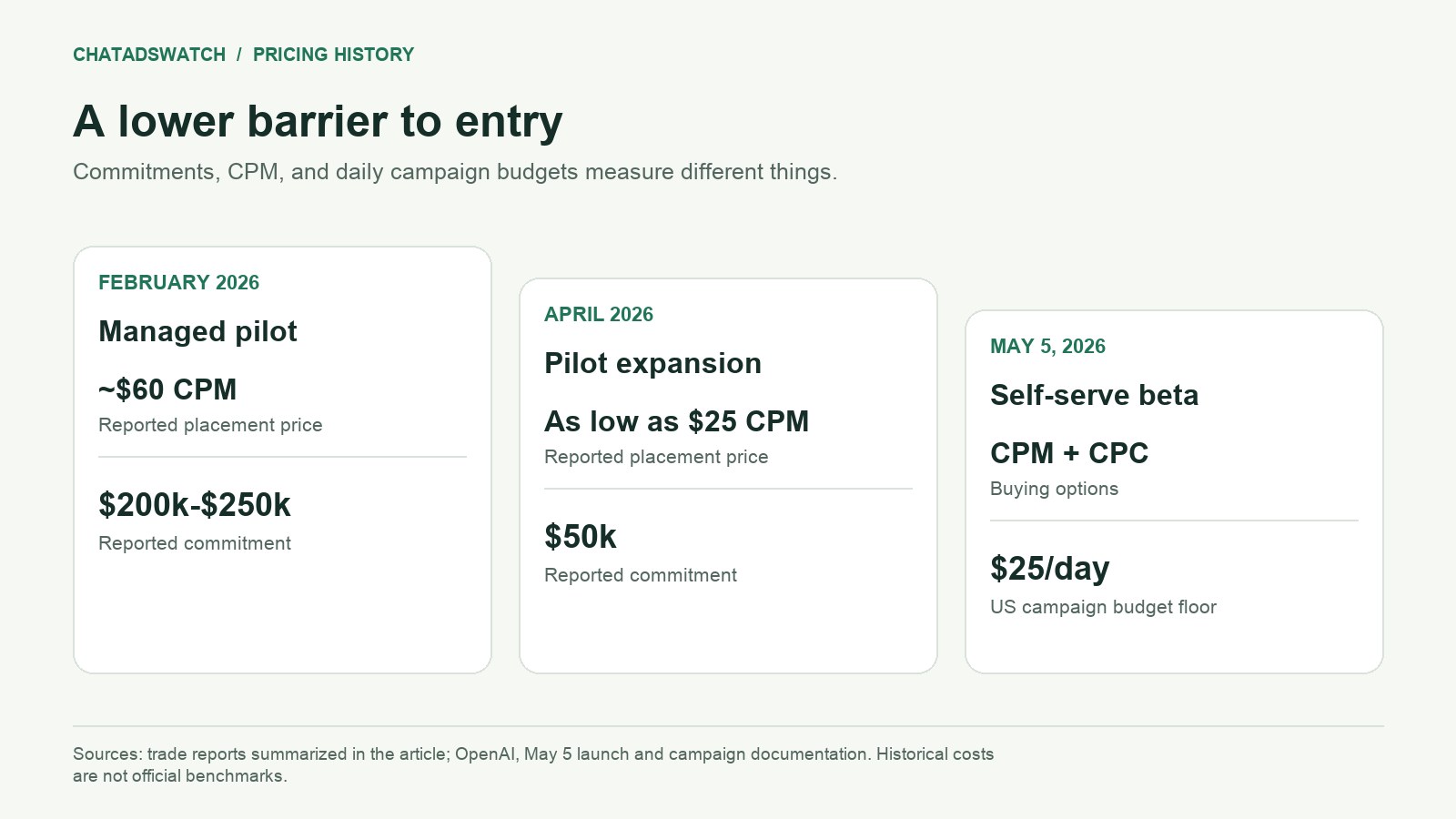
Figure 1 — Reported pilot commitments fell before self-serve access opened. Commitments, daily budgets, and CPM are different measures.
Two cautions before using these numbers. First, the historical price figures are trade-reported and self-reported, not official performance benchmarks; trade outlets even disagree on exactly when the minimum spend disappeared. OpenAI does document the buying mechanisms and recommended starting CPC bids. Second, the auction is relevance-weighted and second-price, so a maximum bid is a ceiling rather than a guaranteed clearing price. Any comparison built on "what people bid" rather than "what campaigns cleared" will overstate the cost.
Comparing CPM Benchmarks for ChatGPT Ads With Other Platforms
For the legacy platforms, the most useful public sources are benchmark aggregations that compile agency reports and platform studies. The ranges below are drawn from CPM-calculator.io's 2026 compilation (which aggregates Affect Group's US Meta ranges, Store Growers' YouTube data, Stackmatix's TikTok bands, and ZenABM's LinkedIn comparison), Calc4Marketers' US benchmarks, and Scale Growth's CPM tiers:
| Platform | Typical 2026 CPM range | Compilation's reported average | Context |
|---|---|---|---|
| Google Display Network | ~$2.80–$6.50 | ~$4.55 | Cheapest broad reach; jumps with narrow audiences or premium inventory |
| TikTok | ~$4.50–$12 | ~$8 | UGC-style creative keeps CPM near the floor |
| YouTube (in-stream) | ~$5–$14 | ~$9.30 | US campaigns typically above the global average |
| Meta (Facebook + Instagram) | ~$8–$23 | ~$14.50 | US campaigns sit near the high end; objectives move the range |
| ChatGPT Ads | ~$25–$65 (self-reported) | none stable yet | Months of trading; single-card inventory; Free/Go audience only |
| ~$15–$44 | ~$33.80 | Premium reflects professional-audience targeting |
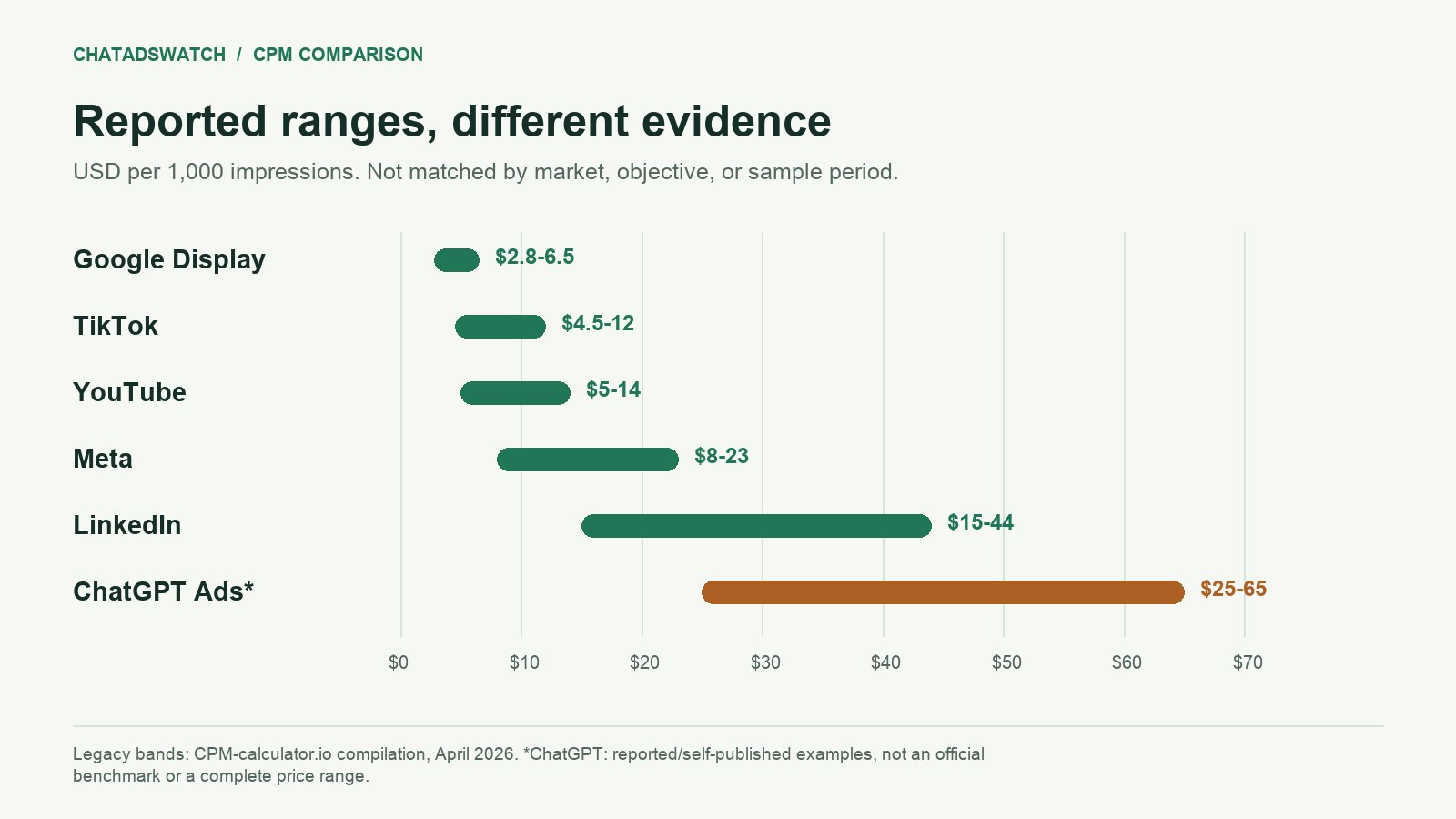
Figure 2 — Reported ChatGPT ad pricing overlaps LinkedIn's band, with far wider uncertainty.
On raw numbers, ChatGPT's reported range overlaps LinkedIn's and is higher than the Meta band in this compilation. But the honest read of Figure 2 is the width of the ChatGPT bar, not its position: it is built from a handful of months of self-reported outcomes, while the legacy bands combine reports with different methods and sample periods. Neither row is a controlled cross-platform experiment.
Five Adjustments Before You Call Any CPM Comparison Fair
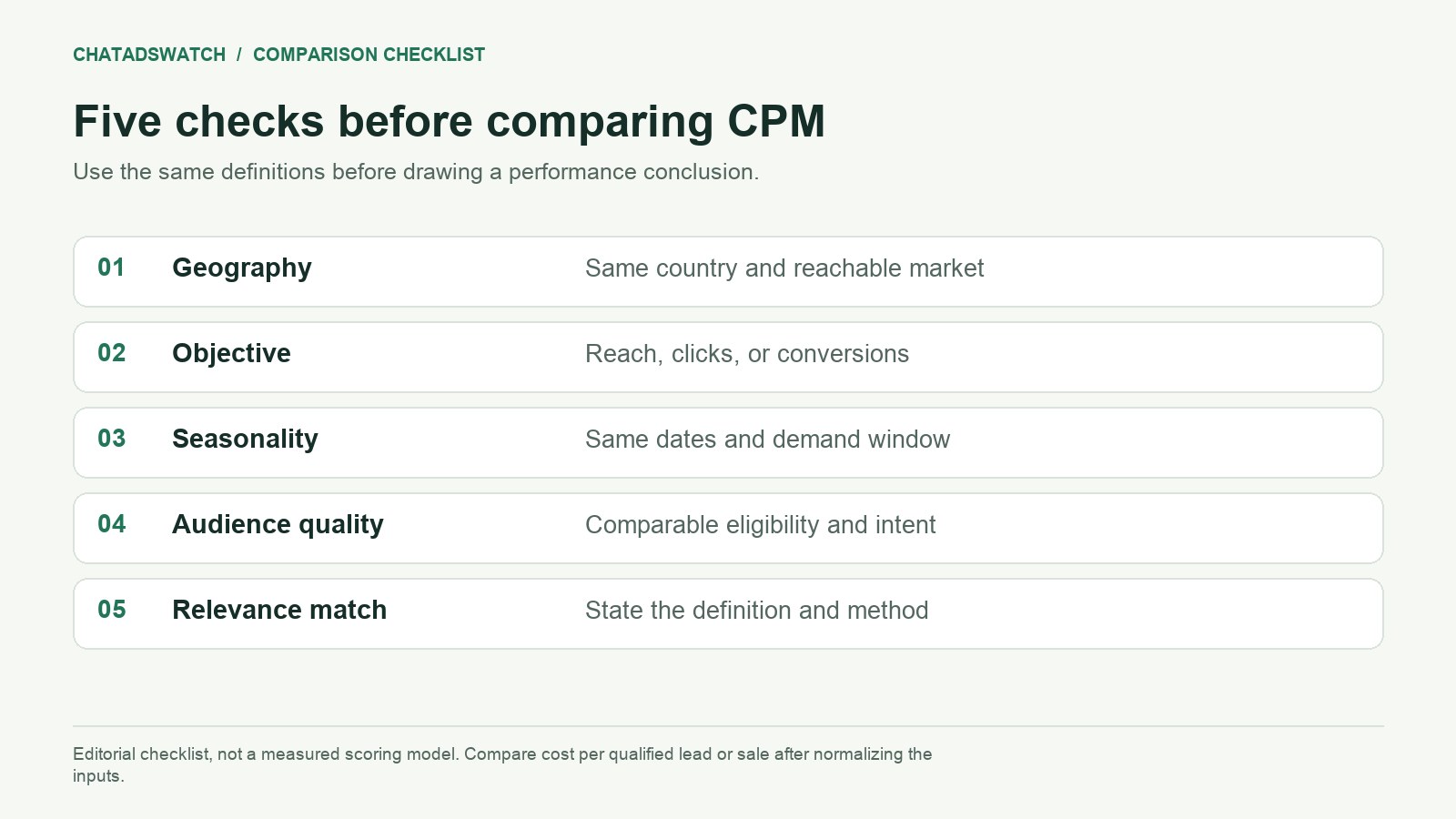
Figure 3 — Five checks that make the comparison more meaningful.
Before ranking ChatGPT against any legacy platform, walk each dial:
- Geography. US inventory costs multiples of other regions — Calc4Marketers pegs the blended US average at $10.50 against far lower rates in most other markets. ChatGPT ads opened self-serve in the US, then expanded to Europe, India, MENA, and more than 60 countries by September 2026, but nearly all published ChatGPT pricing data is US data. Comparing a US ChatGPT figure against a global Meta average stacks the deck.
- Campaign objective. On Meta, reach objectives price materially below sales or lead-generation objectives in the same account. Benchmarks rarely state which objective they average. A ChatGPT impressions campaign and a conversion-optimized campaign are different products wearing the same CPM label.
- Seasonality. Q4 pressure lifts CPM roughly 20–50% across platforms, with the BFCM window peaking higher still. A ChatGPT figure from a spring pilot and a Meta figure from November are not the same currency.
- Audience quality. LinkedIn's professional targeting can command a premium, but the size of that premium depends on which campaigns you compare. What does a ChatGPT impression carry? A logged-in adult who chose not to pay for an ad-free tier, in a task-focused, high-intent conversational moment. That is a plausible premium — but it is currently an argument, not a measurement, and honest comparisons label it as such.
- Relevance match. SE Ranking judged 14.35% of observed ChatGPT ads unrelated to their prompt; Searchable's analysis of 11,000 ads graded 33% unrelated and only 27% a direct match. An impression served into the wrong conversation is cheap reach, not targeted reach. If you estimate a cost per relevant impression, state the relevance definition and divide CPM by the relevant-impression share; this is a modeled metric, not the platform's reported CPM.
When CPM Is the Wrong Metric
CPM measures the price of exposure. ChatGPT ads are fundamentally selling something else — placement inside a high-intent conversation — so a comparison that stops at CPM will mislead in both directions.
- Compare CPC as well. OpenAI suggests starting CPC bids of $3–5; self-reported outcomes run roughly $2–10, with one agency's self-published campaign data (Synter) showing $5–13 CPCs at volume in B2B — their own account numbers, not an industry baseline. Depending on vertical, those clicks compete with Google Search rather than with Meta's feed.
- Translate CPM into a click-cost scenario. For illustration, assume a $30 CPM and a 0.5% click-through rate: 1,000 impressions produce five clicks, implying a $6 CPC. This is arithmetic using assumed inputs, not an observed result. Separately, if only two-thirds of impressions qualify as relevant under your definition, the modeled cost per 1,000 relevant impressions is $30 ÷ (2/3) = $45. Do not treat vendor relevance studies as a measurement of your campaign.
- The metric that actually matters is downstream. Cost per qualified conversation, cost per lead, cost per sale — no platform publishes comparable conversion benchmarks, and OpenAI has none yet. Until it does, any ROI ranking of ChatGPT against Meta or Google is constructed, not measured.
Where Ad-Library Data Fits In — and Where It Stops
CPM benchmarks tell you the price of entry. Competitive observation tells you whether the entry is worth buying, and the two datasets complement each other. This is where a searchable ChatGPT ad library earns its place in a benchmarking workflow.
ChatAdsWatch is an independent example built for exactly this — this article is published by its editorial team, so we will describe both its uses and its limits. Its public ad library provides industry summaries and limited previews of observed sponsored cards; detailed records and associated buyer prompts are available in the research workspace, subject to account access. For a CPM comparison, the library answers questions the pricing tables cannot: How many advertisers already concentrate in your category's prompts? (Observed density is a research signal, not a measurement of bid competition or auction prices.) What creatives have appeared in the captured single-card placements? Which conversational contexts attract ads at all — and which have no ads in the available sample?
Pair the observations with Website Analysis for traffic and AI-referral context on the domains behind the ads, and with the methodology page for how observed, inferred, and estimated data are labeled. Library samples do not establish complete advertiser coverage or prove that a creative won an auction. What the library cannot do is reveal spend: it shows who advertised and where, never what anyone paid.
What These Numbers Can and Cannot Prove
What holds up:
- The May 5 self-serve launch and CPC introduction are documented by OpenAI. Earlier pilot costs and commitment reductions remain trade-reported history.
- The legacy-platform CPM ranges offer planning context, although different aggregations use different samples and definitions.
- Ad frequency observations (the ~26% figure, the 1,159 advertisers) come from a disclosed method on a large sample.
What does not:
- The ChatGPT CPM examples cited here are trade-reported or self-published, and the platform's own FAQ disclaims having benchmarks. Treat any precise ChatGPT "average CPM" you see elsewhere as marketing.
- The legacy benchmarks are compiled, not audited; aggregators blend methodologies, geographies, and objectives. They are bands to reason with, not means to quote.
- The SE Ranking and Searchable relevance studies are single, unreplicated datasets from vendors with commercial interests in the topic. Their mismatch rates disagree with each other (14.35% vs 33%) under different definitions and sampling methods; their rates are not interchangeable.
- None of this predicts your CPM. Your price will be set by a relevance-weighted second-price auction in your specific category — and no published table contains your category yet.
- Ad-library observations show who advertised, not what they paid; absence from a capture sample is not proof of absence from the auction.
- CPM is not ROI. Nothing here measures whether a ChatGPT dollar outperforms a Meta dollar — only what each dollar buys at the impression level.
FAQ
1. What is a realistic CPM benchmark for ChatGPT ads in 2026?
There is no official one — OpenAI's advertiser documentation states the platform does not yet have performance benchmarks. An illustrative planning band drawn from trade-reported and self-published data is roughly $25–65 CPM, down from the reported ~$60 launch CPM of the February 2026 pilot, alongside $2–10 self-reported CPCs and suggested starting bids of $3–5. Treat all of it as a moving range: buying opened to self-serve with no minimum spend only in May 2026, and pricing norms are still forming.
2. Is ChatGPT advertising more expensive than Meta or Google?
On raw CPM, usually yes — the self-reported $25–65 range sits above Meta's typical $8–23 band and far above Google Display's $2.80–$6.50. But raw CPM compares different products: a ChatGPT impression is a single card inside a high-intent conversation shown to logged-in Free and Go users, while a Meta impression is one unit in an endless scroll. On a CPC or effective-CPM basis, ChatGPT can compete with Google Search for some verticals. The honest answer is that the comparison is only meaningful after normalizing for geography, objective, season, audience, and relevance match — and before you spend anything, observing which brands already advertise in your category's prompts through a library such as ChatAdsWatch can help frame a test, without revealing current auction prices.
3. Where does ChatAdsWatch fit in a CPM benchmarking workflow?
It covers the observation stage that pricing tables leave blank: the ad library provides industry summaries and observed creative previews; the research workspace exposes detailed records and associated buyer prompts, subject to access. Website Analysis adds traffic and AI-referral context for any domain, and the methodology page explains how observed, inferred, and estimated data are separated. What it does not do is report spend — CPM figures still have to come from trade reporting, self-published outcomes, or your own account once you test the channel yourself.
Conclusion
To compare CPM benchmarks for ChatGPT ads with other platforms, first align the market, objective, dates, audience, and relevance definition. Then compare qualified leads or sales from your own test. Public price ranges can help you plan a budget; observed ad-library data can help you choose what to investigate. Neither proves the price or return your campaign will achieve.
Put the checklist to work
Start with a real advertiser.
Browse the public library, inspect the methodology, and decide whether the collection fits your market.
Explore the ad library →All articles